Cultural heritage, law, tourism and restitution

Cultural and natural heritage have gained international significance over time with the emergence of exploratory travel, mass tourism and the admiration of travellers. There are many reasons why cultural and natural heritage are changing places: from archaeological excavations and natural heritage exploration to the dangers posed by war and conflict to cultural heritage, including art. The eternal dilemma that has characterised the past, but has over time become the subject of disputes between countries, is the return of alienated cultural and natural heritage. The question rightly arises whether natural or cultural heritage acquired without legal title can still be seen in its natural and cultural environment in the same condition as it was at the time of its appropriation.

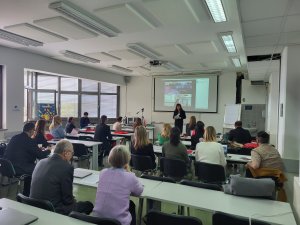
As part of the Slovenian-Turkish bilateral project between the University of Primorska and Turkish universities in Istanbul and Marmara, the UP Faculty of Tourism Studies Turistica, in collaboration with the UP Faculty of Humanities, organized the 2nd colloquium on Friday, May 19, 2023, with the theme "Cultural heritage, law, tourism and restitution".

The colloquium, which was opened with introductory speeches by the Rector of the University of Primorska, Prof. Klavdija Kutnar, Her Excellency Ambassador of the Republic of Turkey in Slovenia, Mrs. Aylin Taşhan, and Academic and Honorary Prof. Janez Kranjc, intertwined aspects from various scientific disciplines and research, proving that collaboration is of utmost importance for understanding and addressing situations that arise due to disconnection, lack of information, and fragmented perspectives on the world. Colleagues from the University of Primorska were joined by colleagues from the University of Ljubljana and the University of Maribor in the joint search for solutions at the meeting.

In the morning session of the colloquium, aspects of humanities studies and tourism were presented, leading to the following conclusions: cultural heritage as a source of identity and recognition is of vital importance from bottom to top; theoretical concepts behind the repatriation of cultural heritage were discussed; the practice of cultural heritage conservation in museums and the marketing role of cultural heritage in tourism over time and place were examined.

Afterwards, international law and humanities intertwined, highlighting the significance of authenticity: traditional archaeological methods combined with scientific techniques must verify the authenticity of archaeological materials; the impact of cultural and natural heritage on the EU economy was explored; issues of international private law in cross-border disputes over cultural goods were addressed, along with the adequacy of the existing international legal framework and its implementation in practice.

In the afternoon session, law and tourism intertwined, highlighting the deficiencies in Slovenian criminal law regarding the return of movable property acquired through criminal activities, as well as the functioning of the law on the protection of cultural heritage. The role of tourism in the repatriation of cultural heritage was discussed, including the Maltese case of stolen 19th-century sword and dagger, along with the complexity of the restitution process and the systemic approach to addressing these issues and finding solutions.

The experts concluded their thoughts in a book of abstracts published by the University of Primorska Publishing House.

As part of the cultural tourism visit, the host, the Faculty of Tourism Studies Turistica, took the Turkish guests on a tour of the cultural heritage of Primorska, starting with Piran. They also attended a performance by the folklore ensemble Val at the Auditorium, watched the film "Trohnenje" by Slovenian humanitarian and European of the Year, Tomo Križnar, which took place in the pastoral center in Piran, and visited the cultural heritage sites in central and northern Slovenia. The colloquium will continue from September 3 to 6 in Istanbul.

The colloquium was organized at UP FTŠ Turistica by the project mnaager from UP FTŠ Turistica, Prof. Tadeja Jere Jakulin.


The project received financial support from the Slovenian Research Agency ARRS and the Turkish scientific agency TÜBİTAK.